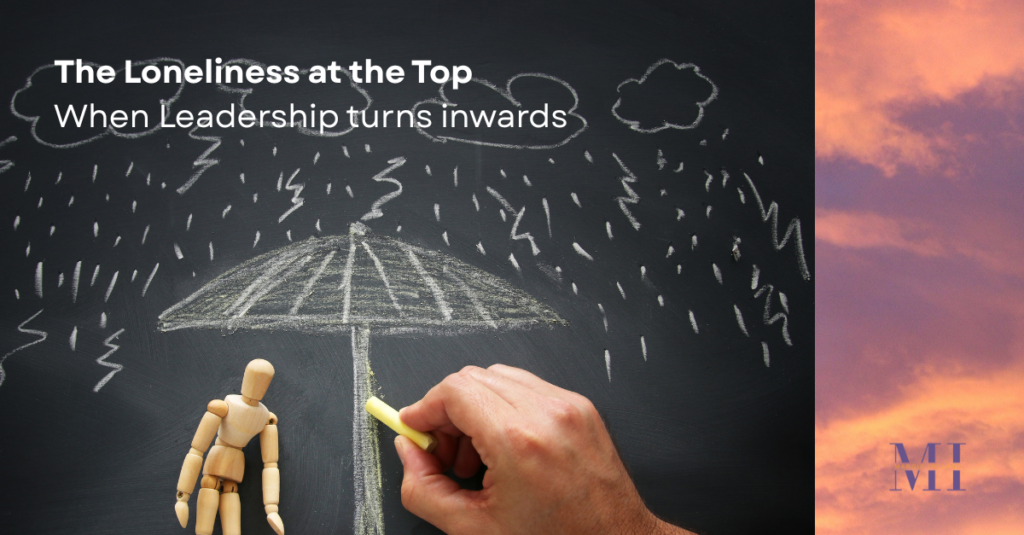
You took time off. You disconnected. But here you are in January, and that weight is already back on your shoulders. Research shows that 70% of C-suite executives are so burned out they’re considering quitting, and 82% of CEOs have experienced exhaustion indicative of burnout (Haden, 2024). But here’s what most leadership advice won’t tell you: if rest doesn’t restore you, the problem isn’t the rest. It’s what you’re resting from.
The Real Problem
Most CEOs treat values like wall art – nice to look at, easy to ignore when decisions get hard. But research consistently shows that values-based action isn’t just good ethics; it’s good business.
When leaders make decisions aligned with their core values, they experience lower burnout, higher job satisfaction, and better results (Wincent et al., 2018). The reason is simple: working against your values creates constant internal friction. Every misaligned decision depletes you. Every compromise on what matters accumulates like compound interest – on exhaustion instead of growth.
CEOs who operate in values alignment report greater resilience during high-stress periods and maintain longer tenure (Vistage, 2025). Their teams show higher engagement. Their decisions become faster and clearer. Not because they’ve eliminated hard choices, but because they’ve eliminated the hardest choice: betraying who they actually are.
The Performance Paradox
Most leadership advice treats performance and well-being as separate pursuits. Work hard or take care of yourself. Drive results or maintain balance. Choose.
But values-based action collapses this false dichotomy. When your work aligns with your values, effort doesn’t deplete you the same way. You’re still working hard – but you’re working with your grain instead of against it.
Think of it like rowing a boat. You can row against the current and eventually reach exhaustion, or you can turn the boat and let the current help you. Same effort. Different outcome. Your values are your current.
The Eulogy Activity: Getting Clear on What Actually Matters
The problem is most leaders have never actually clarified their values. They’ve inherited them from parents, absorbed them from culture, or adopted them from business books. They’re operating on someone else’s operating system. Here’s one of the most powerful exercises to cut through that noise: write your own eulogy. Not the sanitised LinkedIn version. The one you’d actually want someone to read at your funeral.
Here’s how to do it:
Set aside 30 minutes where you won’t be interrupted. Imagine you’re at the end of your life, and someone who knew you deeply is speaking at your memorial. Write what you’d want them to say about:
- What you stood for, even when it cost you
- How you treated people when no one was watching
- What you chose over money, status, or approval
- The moments you’re most proud of
- What made your life meaningful
Don’t filter for what sounds impressive. Write what would actually make you feel like your life mattered.
Now the critical part: read what you wrote and compare it to how you’re actually living. The gaps between your eulogy and your calendar reveal everything. If your eulogy talks about being present for your family but your calendar shows 70-hour weeks and weekend emails, that’s data. If your eulogy mentions integrity but your decisions prioritise optics
over honesty, that’s data too. These gaps aren’t failures. They’re your values trying to get your attention.
Now here’s the critical part: read what you wrote and compare it to how you’re actually living.
The gaps between your eulogy and your calendar reveal everything. If your eulogy talks about being present for your family but your calendar shows 70-hour weeks and weekend emails, that’s data. If your eulogy mentions integrity but your decisions prioritise optics over honesty, that’s data too. These gaps aren’t failures. They’re your values trying to get your attention.
From Clarity to Action
Values clarity without action is just sophisticated procrastination. Once you know what matters, the question becomes: what’s one decision you can make this week that closes the gap between your eulogy and your reality?
If you’re finding it hard to pinpoint where the gaps are, a values questionnaire can help map where you’re aligned and where you’re working against yourself. Sometimes seeing it in black and white makes the patterns clearer.
Because here’s the truth: you can’t sustain high performance while working against yourself. Eventually, something breaks – your health, your relationships, your company, or your sense of meaning.
The CEOs who last don’t work harder. They work truer. And it starts with getting clear on what “true” actually means for them.

About the Author
Margie Ireland is a leadership psychologist and executive coach who supports CEOs, senior executives, and sometimes their clients to achieve better performance. With a rare combination of commercial acumen and psychological expertise, she understands the unique pressures facing leaders—from managing complex client relationships and driving performance to navigating the personal toll of sustained high-stakes decision-making. Margie is also the author of The Happy Healthy Leader – how to achieve your potential even during a crisis’. She is also the founder of The Sustainable CEO,

References
Haden, J. (2024, February 7). Research shows most CEOs face exhaustion, burnout, even early death—but not small business owner CEOs. Inc. https://www.inc.com/jeff-haden/research-shows-most-ceos-face-exhaustion-burnout-even-early-death-but-not-small-business-owner-ceos.html
Vistage. (2025, June 29). The CEO lifecycle: What to do when burnout sets in. https://www.vistage.com/research-center/personal-development/work-life-balance/20230907-ceo-burnout/
Wincent, J., Ortqvist, D., & Drnovsek, M. (2018). CEO burnout, managerial discretion, and firm performance: The role of CEO locus of control, structural power, and organizational factors. Long Range Planning, 51(6), 953-971. https://doi.org/10.1016/j.lrp.2018.05.003