You know that voice. It appears after a difficult meeting and tells you, “I should have handled that better.” It shows up after an important decision and asks, “What if I’ve got this wrong?” When something doesn’t go to plan, it may remind you, “I should have seen this coming.”
For leaders, that voice can be persistent. We often call it our inner critic: the stream of negative or self-critical thoughts that can appear when we are under pressure.
But your inner critic isn’t necessarily the problem. What matters is how you respond to it. This is where psychological flexibility can become a useful leadership skill.
What is psychological flexibility?
Psychological flexibility simply means being able to notice what is happening inside you, including uncomfortable thoughts and feelings, without automatically allowing them to dictate what you do next.
It doesn’t mean pretending everything is fine or eliminating difficult emotions. Instead, it creates some space between what you are thinking and what you do, allowing you to choose a response that is more useful and aligned with what matters.
For a CEO or executive leader, that space can be valuable. Leadership rarely gives you the luxury of waiting until you feel completely confident before making a decision. Sometimes you have to decide while the doubt is still there.
Your inner critic may be trying to help
It can be tempting to see your inner critic as something that needs to be silenced. However, self-critical thoughts often develop for a reason. They may be trying to protect you from making a mistake, disappointing someone, losing control, or failing to meet your own high standards.
For a high-performing leader, this might sound like, “Don’t get this wrong,” “You should have known better,” or “If you want it done properly, you’d better do it yourself.”
There may be useful information within those thoughts. Perhaps you do need to prepare more carefully or reconsider a decision. The difficulty begins when the message becomes so loud that you stop responding thoughtfully and start reacting automatically.
You don’t have to believe every thought you have
One useful shift is recognising that a thought is not necessarily a fact.
If your mind says, “I’m going to mess this up,” you don’t need to argue with it or replace it with positive thinking. Instead, you can simply notice it: “I’m having the thought that I might mess this up.”
That small change can create some distance between you and the thought.
Psychologists sometimes refer to this as cognitive defusion. The term may sound clinical, but the idea is simple: learning to see a thought as a thought rather than automatically treating it as the truth.
For leaders, this creates an opportunity to ask: What is actually happening here, and what response would be most useful?
Respond rather than react
When uncomfortable thoughts trigger a strong reaction, we often try to get away from them. In leadership, this can look surprisingly productive. You work longer hours, check everything yourself, postpone difficult conversations, become defensive when challenged or keep searching for more information because you don’t feel ready to decide.
From the outside, these behaviours can look like commitment or high performance. But sometimes they are ways of managing discomfort rather than addressing the underlying issue.
A more flexible approach begins with noticing the pattern. When does your inner critic appear? Is it after receiving feedback, before an important presentation or when someone challenges you?
Once you recognise the pattern, you have more choice. You can pause, notice what you are feeling and ask yourself what you actually need to do.
Come back to what matters
Psychological flexibility isn’t about getting rid of uncomfortable thoughts. It is about being able to move towards what matters even when those thoughts are present.
Instead of asking, “How do I get rid of this anxiety?”, you might ask, “What kind of leader do I want to be in this conversation?”
Instead of asking, “How do I make sure everyone agrees with my decision?”, consider, “What decision is most aligned with our purpose and values, even if some people disagree?”
These questions shift your attention from controlling how you feel towards how you want to lead.
Your inner critic doesn’t need to become your enemy
You don’t have to silence your inner critic, defeat it or believe everything it tells you. Instead, learn to listen to it differently. Sometimes it will point towards something worth paying attention to. Sometimes it will simply be an old pattern playing on repeat.
Your job is to notice the difference, understand what may be useful, reconnect with what matters and choose your response. That is one of the opportunities offered by psychological flexibility: developing the capacity to respond differently when your mind is under pressure.
The way you respond to your own inner critic can also influence your team. If you respond to uncertainty by becoming controlling, or to mistakes with harsh self-criticism, people may learn that uncertainty and mistakes are not safe. When leaders can pause, reflect and respond thoughtfully, they demonstrate that pressure does not have to dictate behaviour.
Developing greater flexibility under pressure
Leadership doesn’t necessarily become easier simply because you become more experienced. The decisions can become bigger, the consequences greater and the pressure more complex. Learning to recognise your patterns of thinking and responding more thoughtfully can help you navigate these challenges with greater awareness and perspective.
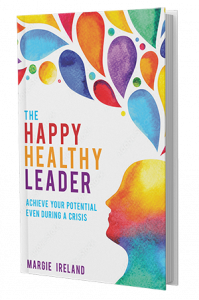
My book, The Happy Healthy Leader: How to Achieve Your Potential Even During a Crisis, explores the psychology and practical strategies that can help leaders navigate pressure and unexpected change while protecting both their performance and wellbeing.
Developing psychological flexibility isn’t about eliminating doubt or getting every decision right. It’s about learning to make room for uncertainty, recognise what matters, and choose how you respond. And sometimes, that small shift in how you relate to your thoughts can make a meaningful difference to how you lead yourself and others.