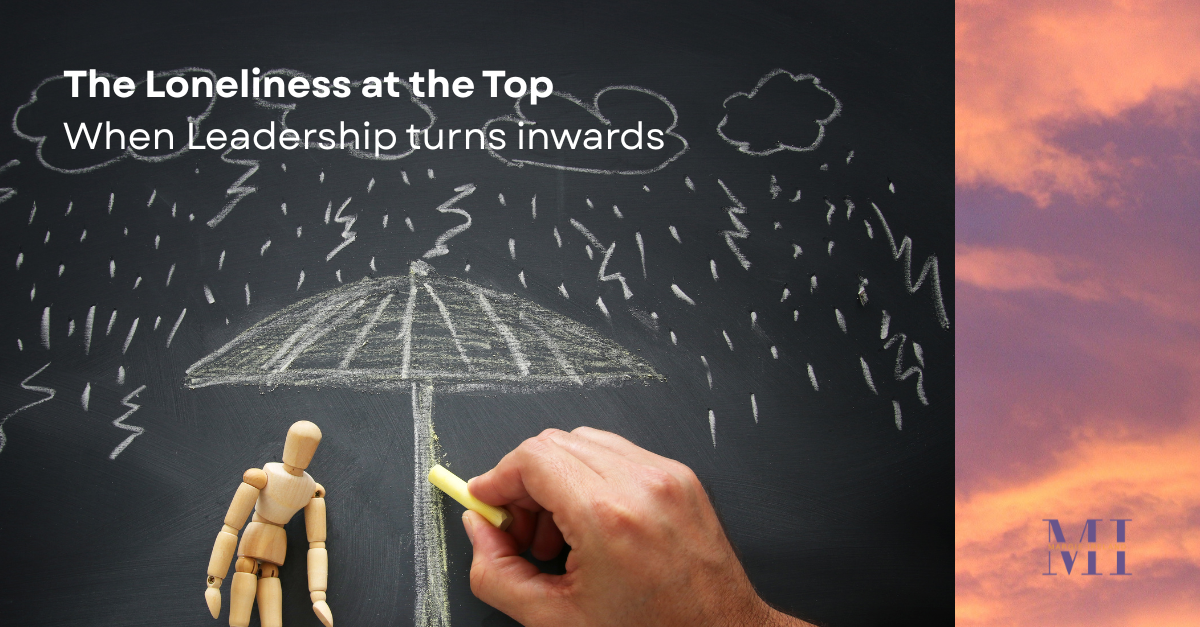
There is a particular kind of silence that comes with executive leadership.
You can be surrounded by people, a board, an executive team, a workforce, but have nowhere to put the pressure when it shows up at 3am. Your team needs confidence, your board expects certainty, and your family already sees how much the role takes from you. Yet the internal load often has nowhere to land.
So, like most capable leaders, you tell yourself it is just stress. Everyone has stress. You push through and assume this is simply the price of responsibility.
Often, it isn’t.
The question leaders rarely ask out loud
Is what I am feeling normal? Is this stress, burnout, or something else, like anxiety or depression?
Most senior leaders never ask these questions openly. Not because they are irrelevant, but because asking them feels uncomfortable. Pressure is assumed to be part of the role, and capable leaders are expected to manage it quietly.
In my work with CEOs and senior leaders, a consistent pattern emerges. They come from different industries and face very different commercial realities, yet many describe the same internal experience. Sleep becomes unreliable, not the occasional restless night before a major decision, but persistent disruption. Leaders fall asleep quickly only to wake in the early hours with a racing mind, or lie awake exhausted, mentally rehearsing scenarios that may never occur.
There is usually a sense that something is “off”, but it is hard to name. Some assume it must be stress. Others quietly wonder if it is something more. Most keep going, because that is what they have always done.
What often gets missed is the importance of pausing long enough to be clear about what is actually happening.
Stress, burnout, anxiety and depression are not the same — and clarity matters
Stress, burnout, anxiety and depression can feel similar when pressure has been sustained for long periods. That overlap makes it easy to apply the wrong solution to the wrong problem, which often compounds the issue rather than resolving it.
Stress is the body’s natural fight-or-flight response to challenge. A board presentation, letting someone go, a difficult family conversation, even the lead-up to a major physical event can all trigger it. In the short term, stress can sharpen focus and boost performance, and many leaders have built successful careers on their ability to operate well under pressure. This is the positive side of stress called eustress.
The problem arises when stress becomes distress (‘bad stress’) and is chronic. When the stress response remains switched on without sufficient recovery, it begins to take a physical, emotional and behavioural toll. Sleep fragments, irritability increases, and decision-making becomes more effortful. Over time, unmanaged distress is the most direct pathway to burnout.
Burnout, as described by the World Health Organization, is the result of chronic workplace stress that has not been successfully managed. It is characterised by persistent fatigue, growing negativity or cynicism about work, and a decline in confidence or effectiveness. Leaders often describe feeling depleted or disconnected, even while still functioning. But, others see dysfunction. They see unhealthy stress coping strategies such has alcohol, food, more work, drugs, avoidance, procrastination and micromanagement. I chose chardonnay and more work when I was in burnout 10 years ago.
Anxiety is distinct from both stress and burnout. It involves the nervous system remaining on high alert when there is no immediate threat, or long after a threat has passed. Persistent worry, overthinking and difficulty switching off are common, and sleep disruption, particularly early-morning waking with a racing mind, is often one of the earliest indicators. Sidebar: I purchased this t-shirt for myself at Christmas. Unlike stress, anxiety does not reliably settle when circumstances improve.

Depression sits in a different category again. While it can co-exist with stress, burnout or anxiety, it is typically marked by a sustained low mood, loss of interest or pleasure, reduced motivation, and a sense of disconnection that extends beyond work. Energy, concentration and self-worth are often affected. In senior leaders, depression can be overlooked because performance may be maintained for a period of time, even as the internal cost increases.
In practice, these states can overlap. Even with insight and experience, it can take a deliberate pause to recognise which one is actually driving the symptoms.
Very important. If you believe you have Anxiety or Depression please meet with your GP and ignore an AI diagnosis please. You can also reach out to Beyond Blue 1300 22 4636 or Lifeline 131144 for 24/7 support.
The risk is not experiencing stress, burnout, anxiety or depression. The risk is misidentifying what is going on and responding in ways that unintentionally prolong or worsen it.
When burnout is treated as stress, leaders are encouraged to push harder or simply take a break. When anxiety is treated as workload, the nervous system remains on high alert. When depression is treated as a motivation issue, people are left carrying something far heavier than they should.
Each requires a different approach. Getting it right depends on clarity, not guesswork.
If stress is the mind responding to real danger, anxiety is a smoke alarm going off when there is no fire. Burnout is what happens when the alarm has been ignored for too long.
When the issue is not the business
Eventually, many leaders acknowledge what they already sense. This is not a strategy problem, a capability gap, or a balance-sheet issue. It is an “I” issue.
Business challenges can be workshopped, but personal strain often feels like it should stay personal. Yet at senior levels, personal effectiveness and organisational performance are inseparable. An anxious or depleted leader creates organisational drag. Poor sleep delays decisions, perfectionism becomes a bottleneck, and inconsistency erodes trust. Left unaddressed, these patterns shape how teams operate, how decisions are made, and how sustainable the organisation becomes.
The 3C Intersection: where sustainable leadership is built
Lasting change tends to occur where commercial reality, collective team dynamics, and the complete leader intersect. Focusing on only one of these rarely works for long.
Commercial reality brings the non-negotiables: strategic decisions, time pressure and stakeholder expectations. Leaders need space to pressure-test thinking and move from rumination to action.
Collective team dynamics determine how pressure travels through the system. Many executive teams function as capable individuals running parallel agendas. Under strain, trust erodes and accountability blurs.
The complete leader is the part most often ignored. Health, family, relationships and internal load all sit behind the role. When this is dismissed as something to manage privately, resilience thins and perspective narrows.
Bringing it all together
Sustainable leadership does not come from fixing one piece in isolation. Commercial challenges need psychological clarity, teams need steady and regulated leadership, and leaders need space to understand what is happening internally without judgement.
This is where my work sits, at the intersection of business reality, team dynamics and the human being leading the system. When these three are addressed together, leaders regain clarity, teams stabilise, decisions improve, and the sense of carrying everything alone begins to ease.
Sustainable leadership rarely requires more effort. It requires clearer thinking, earlier intervention, and the right support at the right time.
The loneliness at the top is real. It does not mean you have to navigate it alone.
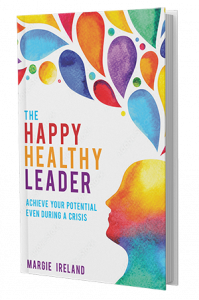
About the Author. Margie Ireland is a leadership psychologist and executive coach who supports leaders, senior executives, and sometimes their clients to achieve better performance. With a rare combination of commercial acumen and psychological expertise, she understands the unique pressures facing leaders, from managing complex relationships and driving performance to navigating the personal toll of sustained high-stakes decision-making. Margie is also the author ofThe Happy Healthy Leader – how to achieve your potential even during a crisis. She is also the founder of The Happy Healthy Leader and The Sustainable CEO.